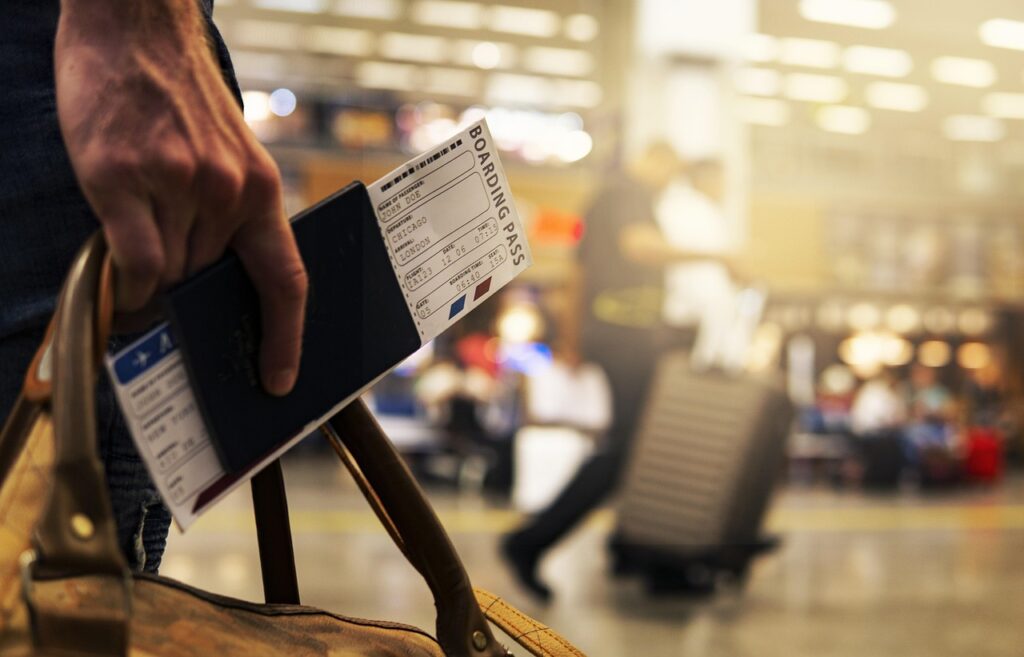
This checklist covers the practical essentials Australian travellers need to sort before boarding a flight to Vietnam. It’s designed to help you avoid common mistakes and arrive prepared.
Passport Checks
Your passport is the foundation of your trip. Vietnam has specific entry requirements that differ from some other Southeast Asian destinations.
Validity requirements:
- Your passport must be valid for at least six months beyond your intended departure date from Vietnam
- If you’re travelling in February 2026 and leaving Vietnam in March, your passport needs to be valid until at least September 2026
- Airlines may refuse boarding if your passport doesn’t meet this requirement
Condition matters:
- Check for water damage, torn pages, or significant wear on the photo page
- Vietnamese immigration officials can refuse entry if your passport is damaged
- You need at least two blank pages for entry and exit stamps
- “Blank” means completely empty – pages with previous stamps don’t count
If your passport is close to the six-month threshold or shows damage, renew it before booking flights. Australian passport renewals currently take several weeks.
Visa Confirmation
Every Australian entering Vietnam needs a visa or e-visa, regardless of trip length. This is not optional.
Before you fly:
- Confirm your visa approval has been issued and is in your inbox
- Check the dates match your travel dates exactly
- Verify your passport number on the visa matches your physical passport
- Print two copies of your e-visa approval – one for check-in, one for immigration
Common last-minute mistakes Australians make:
- Applying for a visa but not checking if it was actually approved
- Discovering at the airport that the visa application “timed out” or was incomplete
- Having a visa that starts the day after they arrive
- Bringing only a digital copy when the airline requires printed proof
The Australian check-in desk will ask to see your visa before issuing your boarding pass. Vietnamese immigration will also check it on arrival. A digital copy on your phone is not always sufficient – bring paper.
If you haven’t sorted your visa yet, you’ll need to do that before continuing with this checklist. That process sits on its own page.
Phone & Connectivity
Australian phones work in Vietnam, but you need to prepare before landing.
Check your phone is unlocked:
- If you’re on a contract with Telstra, Optus, or Vodafone, your phone may be locked to that network
- Contact your provider at least a week before departure to unlock it
- An unlocked phone lets you use a Vietnamese SIM card or eSIM
- This is not the same as your phone’s passcode lock
What works in Vietnam:
- Australian phones on 3G, 4G, and 5G networks work in Vietnam’s cities
- International roaming with Australian carriers is extremely expensive (often $10–$15 per day)
- Most Australians use a local Vietnamese SIM or eSIM instead
Options for staying connected:
- Buy a Vietnamese SIM card at the airport (available immediately after customs)
- Arrange an eSIM before you leave Australia (installs digitally, no physical card needed)
- Keep your Australian SIM in temporarily and switch once you’ve contacted family to confirm arrival
If you plan to use rideshare apps, maps, or translation tools, sort your connectivity method before your flight. Relying on airport or hotel Wi-Fi alone limits your movement and creates stress.
For detailed comparisons between SIM cards and eSIMs, including which providers work best for Australians, that sits on a separate guide.
Money & Payments
Vietnam is increasingly card-friendly, but it remains a cash-heavy country outside major hotel chains and shopping centres.
The reality:
- Small restaurants, markets, street food vendors, and local transport operators expect cash
- Many smaller hotels and guesthouses prefer cash or add card surcharges
- ATMs are widely available in cities and tourist areas
- Australian debit and credit cards work at most ATMs
Before leaving Australia:
- Tell your bank you’re travelling to Vietnam (prevents your card being blocked for suspicious activity)
- Check your daily ATM withdrawal limit
- Know your card’s international transaction fees
- Bring at least one backup card in case your primary card is lost or stops working
ATM tips:
- Use ATMs inside banks during business hours when possible
- Withdraw larger amounts less frequently to minimise fees (Vietnamese ATMs often charge 40,000–50,000 VND per transaction, plus your Australian bank’s fees)
- Decline “dynamic currency conversion” if offered – always choose to be charged in Vietnamese dong, not AUD
You don’t need to bring Australian dollars to exchange. ATMs give better rates than currency exchange counters, and they’re more convenient.
Arrival at the Airport
Australian passport holders go through a straightforward arrival process, but knowing what to expect reduces stress after a long flight.
Immigration process:
- You’ll join a queue for “Foreigners” or “Visa on Arrival” (even with an e-visa)
- Have your passport, printed e-visa, and arrival card ready
- The immigration officer will stamp your passport without much conversation
- Arrival cards are sometimes distributed on the flight; if not, they’re available before immigration
What Vietnamese immigration looks for:
- Your physical appearance matches your passport photo
- Your visa dates cover your entry date
- Your passport is undamaged and has blank pages
Behaviour that avoids problems:
- Don’t photograph immigration or customs areas
- Don’t attempt jokes or casual conversation with immigration officers
- Answer questions briefly and factually if asked
- Keep your phone in your pocket during the immigration interaction
Once stamped in, collect your luggage and pass through customs. Most travellers walk straight through the green “Nothing to Declare” channel without being stopped.
Transport from the Airport
This is where many tired Australians make poor decisions.
Common issues:
- Unofficial taxi drivers approach you in the arrivals hall offering rides
- These drivers often have no meter, charge inflated fixed prices, or take indirect routes
- Australians unfamiliar with Vietnamese currency can’t easily judge if prices are fair
Safer transport choices:
- Pre-book an airport transfer through your hotel
- Use the official taxi ranks (look for Vinasun or Mai Linh companies)
- Use Grab (Southeast Asia’s equivalent to Uber) if your phone has data
What not to do when tired after landing:
- Don’t negotiate cash fares with drivers who approach you inside the terminal
- Don’t accept “special price” offers
- Don’t get into unmarked vehicles
- Don’t hand over large amounts of cash before the journey is complete
If you’re landing late at night, pre-booking a hotel transfer removes this decision entirely. It costs slightly more but eliminates the risk of starting your trip with a frustrating experience.
Health & Basics
Vietnam doesn’t require vaccinations for Australian travellers, but basic health preparation matters.
Travel insurance:
- Bring proof of your travel insurance policy
- Store a digital copy separately from your printed copy
- Check your policy covers medical evacuation (important for regional travel)
- Most Australian policies are accepted by Vietnamese private hospitals
Medications and prescriptions:
- Bring prescription medications in original packaging with your name on the label
- Carry a letter from your GP listing your medications if you’re bringing more than a small supply
- Bring more than you think you’ll need in case of travel delays
- Common over-the-counter medications (paracetamol, antihistamines, stomach remedies) are available in Vietnamese pharmacies
Heat, hydration, and jet lag:
- Vietnam is hot and humid year-round
- Australians often underestimate the heat in Hanoi and central Vietnam during summer
- Bring a reusable water bottle and drink more than you think you need
- The time difference from Australian Eastern states is 3–4 hours – jet lag is usually mild
Final Pre-Flight Check
Use this as a tick-box summary the night before your flight:
- Passport valid for six months past your return date
- Passport in good condition with two blank pages
- E-visa approved and printed (two copies)
- Phone unlocked (if using a Vietnamese SIM)
- Australian bank notified of travel dates
- At least one backup payment card packed separately
- Travel insurance documents accessible
- Prescription medications in original packaging
- Arrival accommodation address written down or saved offline
- Grab app downloaded (if using rideshare from airport)
Vietnam is a straightforward destination for Australian travellers who sort these basics before departure. The bureaucracy is minimal, the infrastructure is improving quickly, and most problems stem from rushing decisions at the airport after a long flight. Get these foundations right, and you’ll arrive ready to enjoy your trip rather than troubleshooting preventable issues.
Last reviewed: Feb 2026
Content on this page is reviewed regularly (approximately every 3 weeks) to reflect changes to visa rules, entry requirements, and common issues affecting Australian travellers. Where requirements are critical, official government sources are referenced.