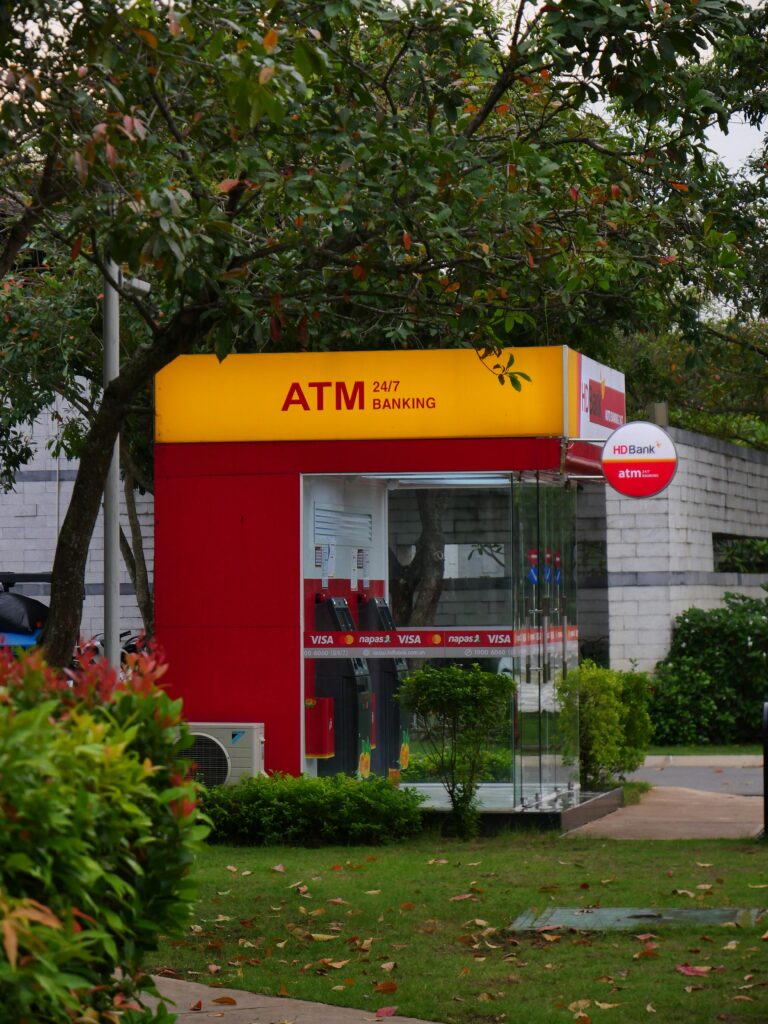
For Australians travelling to Vietnam, one question comes up quickly:
Is Westpac or CommBank cheaper for ATM withdrawals?
The short answer:
Australians using Westpac or CommBank cards in Vietnam will usually pay three types of costs:
- Your bank’s overseas fees
- The Vietnamese bank’s ATM fee
- The exchange rate margin (including any foreign transaction fee)
In most cases, the “better” card depends more on how you use it — and which ATM you choose — than on the logo on the plastic.
This guide explains how the system works and how Australians can reduce unnecessary costs.
Why Vietnam ATMs Feel Confusing
Vietnamese ATMs dispense Vietnamese Dong (VND).
Your Australian bank settles transactions in Australian dollars (AUD).
Visa or Mastercard converts between the two.
On top of that, many ATMs offer to “convert” the amount into AUD on-screen before you confirm. That option is where many Australians accidentally pay more than they need to.
Once you understand who controls each part of the process, the confusion disappears.
How Vietnamese ATMs Charge Australian Cards
When you insert your Westpac or CommBank card into a Vietnamese ATM, three things usually happen:
- The Vietnamese bank may charge a local ATM fee.
This appears on-screen before you confirm the withdrawal. - The withdrawal in VND is converted to AUD.
This normally happens via the Visa or Mastercard exchange rate. - Your Australian bank may add its own fees.
These can include:- A percentage-based foreign transaction fee
- A flat overseas ATM withdrawal fee
The Vietnamese ATM does not control your Australian bank’s fees. It only controls its own local fee and whether it offers dynamic currency conversion.
Vietnamese ATM Withdrawal Limits
Vietnamese ATMs often have lower per-transaction limits than Australians are used to.
Many machines cap each withdrawal at a few million VND per transaction. Some banks allow higher limits than others.
If you need more cash, you can usually perform multiple withdrawals — provided you stay within your Australian bank’s daily limit.
Because both Westpac and CommBank typically charge a flat overseas ATM fee per withdrawal, withdrawing larger amounts less often is usually more cost-effective than making many small withdrawals.
Westpac vs CommBank: How Overseas Fees Work
Both banks use broadly similar structures for international ATM use.
Foreign Transaction Fee
Most standard debit and credit products apply a percentage-based international transaction fee when a withdrawal or purchase is processed in a foreign currency.
Some premium or travel-focused accounts may reduce or waive this fee.
Currency Conversion Margin
The base exchange rate usually comes from Visa or Mastercard. Your bank’s international transaction fee effectively adds a margin on top of that rate.
If you allow the ATM to convert the transaction into AUD (dynamic currency conversion), you add another margin set by the Vietnamese bank or its processor.
Overseas ATM Withdrawal Fee
Both banks generally charge a fixed fee for each overseas ATM withdrawal. This fee applies regardless of how much you withdraw.
Daily Withdrawal Limits
Westpac and CommBank apply daily cash withdrawal limits for security. These can usually be adjusted in your banking app before you travel.
Your Australian daily limit works alongside Vietnamese per-transaction limits — so larger withdrawals may require multiple transactions or multiple days.
Dynamic Currency Conversion (DCC): The Option to Avoid
Almost every Australian traveller sees this screen:
“Would you like to be charged in AUD instead of VND?”
This is dynamic currency conversion (DCC).
What It Does
The ATM sets its own exchange rate and shows you the amount in AUD before you confirm.
Why It Usually Costs More
The rate offered under DCC typically includes a larger margin than the standard Visa or Mastercard rate used when your bank handles the conversion.
You may still pay your bank’s foreign transaction fee as well — even though you see an AUD amount on screen.
What Australians Should Do
When prompted:
- Choose to be charged in VND (local currency)
- Decline conversion to AUD
- Look for wording such as “Continue without conversion”
This choice often makes more difference than whether you use Westpac or CommBank.
Which Vietnamese Banks Are Commonly Used by Australians?
Experiences vary, but many travellers report that some Vietnamese banks offer:
- Higher per-transaction limits
- Clearer fee disclosure
- Occasionally lower local ATM fees
Banks frequently used by Australians include:
- TPBank
- VPBank
- Vietcombank
- BIDV
- Techcombank
Fee structures and limits can change, and may differ between machines, so always read the on-screen message before confirming.
ATMs attached to major bank branches are generally more predictable than standalone machines in tourist areas.
So Which Is Better: Westpac or CommBank?
For most Australians using standard debit products, the cost difference between Westpac and CommBank for a typical short trip is usually small.
One account may have a slightly lower international transaction fee than another, but the overall structure is similar:
- Percentage-based international fee
- Flat overseas ATM withdrawal fee
- Exchange rate margin
The bigger cost drivers are:
- Whether you decline DCC
- How many withdrawals you make
- Which Vietnamese ATM you use
- Whether your account reduces international fees
In practical terms, behaviour matters more than branding.
How Australians Can Reduce ATM Costs in Vietnam
You can often save more by changing habits than by changing banks.
- Withdraw larger amounts less frequently
- Avoid airport ATMs for major withdrawals
- Always decline dynamic currency conversion
- Check and adjust daily withdrawal limits before departure
- Use ATMs from major Vietnamese banks rather than independent machines
These steps usually reduce overall costs more than switching between Westpac and CommBank.
Should You Consider Travel Cards or Alternatives?
Some Australians prefer products that reduce or remove foreign transaction fees.
This can make sense if:
- You travel frequently
- You withdraw cash often
- You want to separate overseas spending from your main account
However, additional cards mean more accounts to manage, and some alternatives have their own fee structures.
For many short-term travellers, a standard Westpac or CommBank card used carefully is simple and effective.
Common ATM Mistakes Australians Make
- Accepting DCC and being charged in AUD
- Making many small withdrawals instead of fewer larger ones
- Ignoring the on-screen local ATM fee notice
- Not checking Australian daily withdrawal limits
- Assuming a decline means the card is blocked
FAQs
Do Vietnamese ATMs accept Australian debit cards?
Yes. Most accept Visa and Mastercard debit cards from major Australian banks.
Will choosing AUD give me a better rate?
Normally no. Choosing AUD activates dynamic currency conversion, which usually adds extra margin.
Is it safe to use ATMs in Vietnam?
ATMs attached to major bank branches in well-lit areas are generally safe. As anywhere, remain aware of your surroundings.
Can I rely only on card payments?
Card acceptance is improving, but many smaller businesses still prefer cash, so most Australians carry some dong.
Final Summary
Most Australians can use either Westpac or CommBank in Vietnam without major cost differences — provided they understand how the system works.
To minimise fees:
- Always choose VND, not AUD
- Withdraw larger amounts less often
- Use ATMs from major Vietnamese banks
- Check your account’s international fee structure before travelling
Between Westpac and CommBank, the “better” card is usually the one with the lower international transaction and overseas ATM fees on your specific account.
But in Vietnam, smart ATM behaviour typically matters more than the logo on your card.